
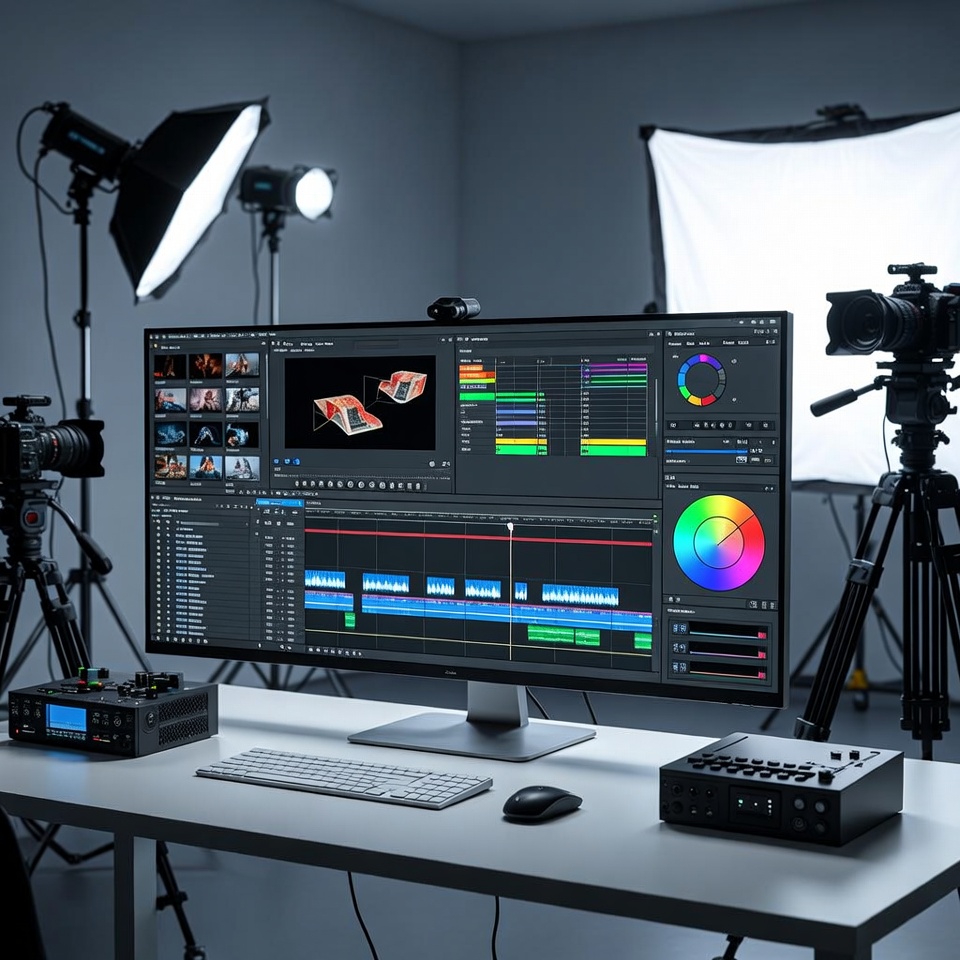
In today’s digital landscape, visual content is no longer optional. Images and video are the primary language of the internet. From social platforms to websites, marketing campaigns to cinematic productions — visuals shape perception, trust, and engagement.
But as AI-powered creative tools continue to evolve, one important truth remains:
No single tool can do everything well.
Whether you are a designer, content creator, marketer, filmmaker, or brand builder, using different tools strategically is not just helpful — it is essential.
Let’s explore why.
1. Every Tool Has a Different Strength
Creative tools are built on different architectures and training data. This means they interpret prompts, lighting, motion, and realism differently.
For example:
- Midjourney is known for stylized, cinematic imagery with strong artistic mood.
- OpenAI’s DALL·E excels at prompt accuracy and structured visual interpretation.
- Runway focuses on AI-driven video editing and generative motion.
- Adobe tools like Adobe Photoshop and Adobe Premiere Pro provide professional-grade refinement and control.
Each platform has a distinct creative bias.
Relying on only one limits your range.
2. Creativity Thrives on Tool Diversity
Historically, artists have always used multiple tools.
A filmmaker uses:
- Cameras
- Lighting rigs
- Editing software
- Sound design tools
A painter may use:
- Different brush types
- Mixed mediums
- Textural techniques
In the same way, digital creators benefit from combining:
- AI generation tools
- Manual editing software
- Color grading platforms
- Animation tools
- Audio design systems
Creativity expands when friction between tools creates new possibilities.
3. AI Tools Interpret Prompts Differently
Even when given the exact same prompt, different AI systems generate dramatically different outputs.
Why?
Because:
- Training datasets differ
- Rendering engines vary
- Style prioritization changes
- Safety filters alter interpretation
This variation becomes a creative advantage.
Instead of fighting inconsistencies, professionals leverage them — generating multiple versions across tools and selecting the strongest components.
4. Quality Control Requires Refinement Tools
AI generation is powerful, but rarely perfect on first output.
That’s where traditional creative software becomes critical.
For example:
- Generate a concept in DALL·E
- Refine details in Adobe Photoshop
- Animate motion in Runway
- Edit final sequence in Adobe Premiere Pro
This layered workflow produces professional-grade results.
AI is acceleration.
Editing tools are precision.
You need both.
5. Different Platforms Serve Different Purposes
Not all content has the same objective.
A social media reel requires:
- Fast turnaround
- Vertical formatting
- Attention-grabbing visuals
A corporate brand video requires:
- Controlled lighting
- Consistent brand color
- Clean typography
- Structured pacing
Using a single tool for both scenarios reduces effectiveness.
Tool selection should match content intent.
6. Risk Mitigation and Flexibility
Relying on one platform introduces risk:
- Pricing changes
- Usage restrictions
- Model updates
- Policy limitations
- Platform outages
Diversifying tools ensures operational resilience.
Professionals build flexible pipelines rather than dependency chains.
7. Creative Identity Requires Intentional Curation
AI tools can generate endless content.
But brand identity requires consistency.
Using multiple tools allows you to:
- Extract strengths from each system
- Maintain control over aesthetic direction
- Avoid generic “AI look” outputs
- Build a unique visual signature
Intentional tool selection becomes part of creative strategy.
8. Technical Depth Expands Creative Possibility
Understanding multiple tools builds creative literacy.
You learn:
- Color theory in grading software
- Composition refinement in editing suites
- Motion physics in animation tools
- Lighting simulation in rendering engines
This technical understanding elevates output beyond prompt dependency.
The most powerful creators are not tool operators — they are tool orchestrators.
9. AI Is a Layer — Not the Entire Stack
There’s a misconception that AI replaces the entire creative process.
In reality, AI becomes one layer within a broader production pipeline:
Idea → Generate → Refine → Animate → Edit → Sound Design → Publish
Each stage may involve a different platform.
The strength lies in integration, not isolation.
10. Innovation Happens at the Intersection
Some of the most compelling digital content today is created by combining:
- AI-generated imagery
- Human-directed editing
- Traditional cinematography
- Advanced motion graphics
- Sound engineering
Innovation rarely emerges from single-tool workflows.
It emerges where systems intersect.
11. Professional Credibility and Client Trust
Clients value:
- Reliability
- Control
- Consistency
- Scalability
When you demonstrate fluency across platforms, you signal professional depth.
You’re not dependent on one system.
You can adapt.
In a fast-moving technological landscape, adaptability is authority.
Final Thoughts
Using different tools to create images and videos is not about chasing trends.
It is about:
- Expanding creative range
- Increasing quality control
- Protecting workflow stability
- Enhancing technical capability
- Building distinctive identity
AI has dramatically lowered the barrier to entry.
But mastery still belongs to those who understand systems — not just prompts.
In the end, tools do not define the creator.
The creator defines how the tools are used.
And the broader the toolkit, the greater the potential.




Leave a Reply